


Page 53 - Koi Net - On-Line Koi Magazine - Issue 12
P. 53
pride and joy, and set off to Japan where he lived and                              When Mark came back from Japan he got a job at
                             worked, with the rest of the farm hands on the farm.                                BritKoi working for Eric Devis and then from there went
                             Very few people spoke any English which meant Mark                                  to work for the Kent Koi Company. Mark ran their Koi
                             had to learn some Japanese!                                                         farm but also got involved in pond construction and
                                                                                                                 was involved in some very large projects. It was here
                             His bed was a futon, with no pillow, in the fish food
                                                                                                                 that he learned all the basic techniques of building a
                             store room, and dinner was a bowl of rice with a raw
                                                                                                                 good Koi pond and the skills involved from pipework to
                             egg cracked over it. He had no preconceptions about
                                                                                                                 filtration and fibreglassing. It was also during this time
                             Koi, never having kept them as a hobby, but his
                                                                                                                 that Mark did the benching at the BKKS National Show
       Mark with Mr. Kamihata.  education at Yamazaki was all encompassing.
                                                                                                                 three years running. Mark and I first met during this
                             Much of his time was spent on the most unpleasant                                   period – it was 1988 and I was working in IT sales at
                             jobs on the farm usually involving pond management. It                              the time.
                             may have been mind numbing, back breaking work but
                                                                                                                 The Farm
                             the result of this is that he really knows how to keep a
                             good mud pond! Mark was allowed to take part in every                               About a year later, Mark decided that it was time he
                             aspect of running a Koi farm. He sat for weeks with the                             started his own Koi farm and with a backer he set about
                             farm manager, Tanaka, carrying out selection,                                       looking for a suitable site. He looked all over the South
                             constantly asking questions and checking that his                                   of England and on his way back from looking at a site in
                             selection technique was correct.                                                    Hertfordshire, he got lost and ended up heading into
                                                                                                                 Thame in Oxfordshire. It was March and as he
                             Mark learned Koi appreciation from an expert farm
                                                                                                                 approached the town he could see the flooded water
                             manager, Nushimura, and also from Mr. Kamihata
                                                                                                                 meadows – it looked an ideal area for a fish farm. He
                             himself. He asked lots of questions and made copious          Work on the ponds begin at   drove into Thame town centre, parked in the car park
                             notes. He even worked in the auction house too. Mark          Cuttlebrook Koi Farm.
                                                                                                                 and the first building he came to happened to be the
                             learned Koi farming Japanese style from the bottom up
                                                                                                                 local land agent. He went in and told them what he was
                             and the techniques he learned are as relevant today as
       The son of the well known   they were then.                                                               looking for and the agent said that just that morning a
       Nishikigoi breeder, Isa, who                                                                              piece of land just like he had described had come onto
       came to study culling at                                                                                  the market in a village called Towersey, just outside of
       Yamazaki at the same time
       as Mark.                                                                                                  Thame. Mark went to look at it and it was perfect!
                                                                                                                 To cut a long story short, Mark set up the farm in 1990
                                                                                                                 only to discover that the money his backer had planned
                                                                                                                 to buy the farm with had disappeared in the recession
                                                                                                                 that had just hit and wasn’t available after all, so the
                                                                                                                 bank had provided the finance – this meant that we had
                                                                                                                 to start selling any fish that he bred as soon as they
       From left to right:                                                                                       were big enough and we couldn’t keep any to grow on,
       Himeji high grade breeder
       (name not known), Tanaka                                                                                  we were throwing out the baby with the bath water so
       San (General Manager for                                                                                  to speak!
       all Mr. Kamihata’s farms),
       known to the other                                                                                        We knew we could never make the business work on
       employees as ‘the culling                                                                                 this basis and after a couple of years made the painful
       machine’!, Nushimura                                                                                      decision to fold the business.
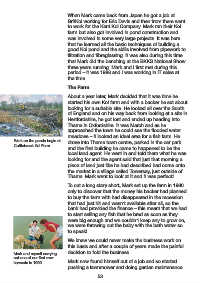
       (Yamazaki Farm Manager)                                                             Mark and myself carrying
       and Kesuge Yamaguchi,                                                               out one of our first ever   Mark now found himself out of a job and so started
       Mark’s colleague and best                                                           harvests in 1990.
       mate at Yamazaki.                                                                                         pushing a lawnmower and doing garden maintenance.
                                          51                                                                                  53

