


Page 70 - Koi Net - On-Line Koi Magazine - Issue 34
P. 70
The temple showcases several buildings of great
                                                                                                                 historic value, including two pagodas, a three-storeyed
                                                                                                                 and a five-storeyed. The five-storeyed pagoda was
                                                                                                                 first built in 730, most recently rebuilt in 1426 and is a
                                                                                                                 landmark and symbol of Nara. The pagoda stands at
                                                                                                                 50 metres high and is the second tallest wooden
                                                                                                                 pagoda in Japan, being only seven metres smaller
                                                                                                                 than the five-storeyed pagoda at Kyoto’s Toji Temple.
                                                                                                                 Neither pagoda can be entered by the public.
                                                                                                                 Kofukuji’s main temple hall, the Central Golden Hall,
                                                                                                                 was destroyed by fire roughly 300 years ago and was
                                                                                                                 not rebuilt to its original size until only recently. It took
                                                                                                                 many years to reconstruct, but the hall was reopened
                                                                                                                 to the public in October 2018. The building is just
                                                                                                                 magnificent and doesn’t look ‘new’ at all, appearing
                                                                                                                 totally authentic. Also located not far from the Central
                                                                                                                 Golden Hall is Kofukuji’s National Treasure Museum,
                                                                                           The impressive Central   which exhibits parts of the temple’s great art
                                                                                           Golden Hall was destroyed   collection, as well as the three-faced, six-armed
                                                                                           by fire 300 years ago, and
                                                                                           although rebuilt looks   Ashura Statue, which is one of the most celebrated
       Above:                                                                              totally authentic.    Buddhist statues in Japan.
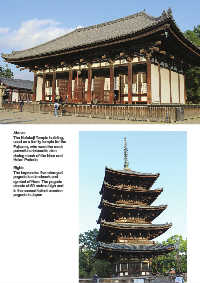
       The Kofukuji Temple building,
       used as a family temple for the
       Fujiwara, who were the most
       powerful aristocratic clan
       during much of the Nara and
       Heian Periods.
       Right:
       The impressive five-storeyed
       pagoda is a landmark and
       symbol of Nara. The pagoda
       stands at 50 metres high and
       is the second tallest wooden
       pagoda in Japan.


                                          18                                                                                  65

