


Page 53 - Koi Net - On-Line Koi Magazine - Issue 78
P. 53
Skin and Gill flukes
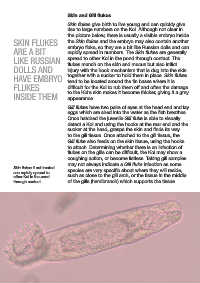
                             Skin flukes give birth to live young and can quickly give
                             rise to large numbers on the Koi. Although not clear in
                             the picture below, there is usually a visible embryo inside
       SKIN FLUKES           the Skin flukes and the embryo may also contain another
                             embryo fluke, so they are a bit like Russian dolls and can
       ARE A BIT             rapidly spread in numbers. The Skin flukes are generally
       LIKE RUSSIAN          spread to other Koi in the pond through contact. The
                             flukes munch on the skin and mucus but also inflict
       DOLLS AND             injury with the hook mechanism that is dug into the skin
                             together with a sucker to hold them in place. Skin flukes
       HAVE EMBRYO           tend to be located around the fin bases where it is
       FLUKES                difficult for the Koi to rub them off and often the damage
                             to the Koi’s skin makes it become thicker, giving it a grey
       INSIDE THEM           appearance.

                             Gill flukes have two pairs of eyes at the head end and lay
                             eggs which are shed into the water as the fish breathes.
                             Once hatched the juvenile Gill fluke is able to visually
                             detect a Koi and using the hooks at the rear end and the
                             sucker at the head, grasps the skin and finds its way
                             to the gill tissue. Once attached to the gill tissue, the
                             Gill fluke also feeds on the skin tissue, using the hooks
                             to attach. Determining whether there is an infection of
                             flukes on the gills can be difficult, the Koi may show a
                             coughing action, or become listless. Taking gill samples
                             may not always indicate a Gill fluke infection as some
       Skin flukes if not treated   species are very specific about where they will reside,
       can rapidly spread to
       other Koi in the pond   such as close to the gill arch, or the tissue in the middle
       through contact.      of the gills (hemibranch) which supports the tissue.

                                                                                           Gill flukes lay eggs, and   The next big question, how many parasites make an
                                                                                           once hatched the juvenile   infection? The quick answer is if you are hunting
                                                                                           Gill flukes can attach
                                                                                           themselves to the Koi.  around a mucus sample on a microscope slide to find
                                                                                                                 anything live or moving, there isn’t a problem. If the
                                                                                                                 moment you look down a microscope there are lots of
                                                                                                                 parasites, then that probably is an infection worth
                                                                                                                 treating but remember that White spot can be serious
                                                                                                                 so if you find it, then it’s probably worth treating.
                                                                                                                 There are many antiparasite treatments available over
                                                                                                                 the counter, which are all suitable to use to rid these
                                                                                                                 spring time pests. I would urge, if you do treat give it a
                                                                                                                 few days and sample again to ensure the treatment
                                                                                                                 has worked.

                                          39                                                                                  55

