


Page 79 - Koi Net - On-Line Koi Magazine - Issue 92
P. 79
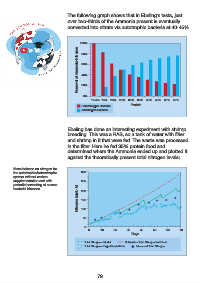
The following graph shows that in Ebeling’s tests, just                             The dotted line is the total amount of nitrogen added
                             over two-thirds of the Ammonia present is eventually                                (about 50.4 grams in the form of Ammonia is excreted
                             converted into nitrate via autotrophic bacteria at 40-45%.                          by the shrimp per kg of food), due to the removal of
                                                                                                                 biomass (sediment) it would end up on the solid line,
                                                                                                                 and the squares indicate the actually measured amount
                                   100%                                                                          of total nitrogen, which is therefore considerably lower.
                                 Removal of Ammonia-Nitrogen  60%                                                bacteria, or by nitrogen gassing. In the following
                                                                                                                 So you lose a percentage in another way, which can
                                   80%
                                                                                                                 partly be explained by the growth of heterotrophic
                                                                                                                 experiment, Ebeling added extra carbon via sucrose to
                                                                                                                 the food (somewhat similar to Koi food, but then a bit
                                   40%
                                                                                                                 more), and again determined what happened:
                                   20%
                                                                                           Mass balance on nitrogen for
                                    0%
                                                                                           the heterotrophic system with   250
                                       12.4% 15%  20%  25%  30%  35%  40%  45%  50%  55%
                                                                                           carbon supplementation at
                                                        Protein                            50% of feed rate as sucrose
                                   Heterotrophic Bacteria
                                                                                           and periodic harvesting of   200
                                   Autotrophic Bacteria
                                                                                                                     Nitrogen (mg/L-N)  150
                                                                                           excess bacterial biomass.
                             Ebeling has done an interesting experiment with shrimp                                    100
                             breeding. This was a RAS, so a tank of water with filter
                             and shrimp in it that were fed. The waste was processed                                   50
                             in the filter. Here he fed 35% protein food and
                             determined where the Ammonia ended up and plotted it                                       0
                             against the theoretically present total nitrogen levels:                                     0    10   20    30   40    50   60    70
                                                                                                                                            Days
       Mass balance on nitrogen for                                                                                     Total Nitrogen – Model  Cumulative Total Nitrogen from food
       the autotrophic/heterotrophic   300                                                                              Total Nitrogen – Experimental Data  Measured Total Nitrogen
       system without carbon
       supplementation and with    250
       periodic harvesting of excess
                                 Nitrogen (mg/L-N)  150                                                          By regularly removing the sediment, the extra formed
       bacterial biomass.          200

                                                                                                                 biomass at the bottom of the tank, the nitrogen level
                                                                                                                 really remained completely under control. The measured
                                   100
                                                                                                                 nitrogen levels exactly followed the cleaning schedule. It
                                   50
                                                                                                                 was also examined what percentage of the nitrogen still
                                                                                                                 present was in the form of nitrate. This turned out to be
                                    0
                                      0    10    20   30    40   50    60   70                                   almost everything without the addition of sucrose,
                                                        Days
                                                                                                                 and after sucrose addition only a few percent of the
                                    Total Nitrogen – Model  Cumulative Total Nitrogen from food                  nitrogen. Interestingly, Ebeling says that about 1.6% of
                                    Total Nitrogen – Experimental Data  Measured Total Nitrogen
                                                                                                                 the nitrogen binds in autotrophic biomass and no less
                                                                                                                 than 36% in heterotrophic biomass.


                                          79                                                                                  80

